
Contents
- What is Citrine? Difference between Real and Heat Treated
- History and Symbol of Abundance
- Physical and Chemical Properties
- Spiritual & Energetic Effects of Citrine
- Areas of Use and Chakra Compatibility
- Citrine Care & Energy Cleansing
- Buying Guide: How to Identify Natural Citrine?
- Citrine Stone Statistics
- Frequently Asked Questions (FAQ)
What is Citrine? Difference between Real and Heat Treated
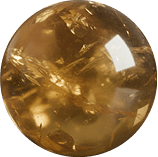
Citrine is a naturally yellow crystal type belonging to the quartz family, mineralogically like Amethyst and Negev. Its chemical formula is Silicon Dioxide (SiO₂) and it gets its color from traces of Iron Oxide (Fe₂O₃) in the crystal.
Mohs: 7 • Chemical: SiO₂ • Chakra: Solar Plexus (Abdomen)
The majority of commercially available citrine is obtained by exposing the more common Amethyst stone to high heat, changing its color from purple (Amethyst) to yellow/orange (Citrine). True Natural Citrine is quite rare and usually has softer, smoky yellow-brown tones.
Formation & Basic Resources
- Natural Formation: It forms by oxidation of iron ions at high temperatures through a slow hydrothermal process.
- Main Resources: The most important natural resources are Brazil (Rio Grande do Sul) and Madagascar.
- Heat Treatment: Citrine (converted from Amethyst) obtained by heat treatment usually has darker, burnt orange tones and "boiled corn"-like inner layer patterns.
History and Symbol of Abundance
Citrine was used as jewelry and ornaments during the Ancient Greek and Roman periods. Due to its color, it has always been associated with the sun and is considered a stone that drives away darkness and negativity.
"Citrine is a blessing; it attracts not only money, but also joy, health and happiness in all areas of life."
Its popularity increased especially during the Art Deco period of the 20th century. Today, it is known in the metaphysical world as the "Merchant's Stone" or "Money Stone" and is used to attract prosperity in businesses.
Traditional Beliefs
- Sunlight: Promotes vitality, energy and positive thinking.
- Abundance and Prosperity: It is believed to increase the power of financial attraction when kept in a safe, wallet or at work.
- Negativity Cleanser: Unlike other stones, Citrine is believed to transform energy rather than absorb it. Therefore it does not need to be cleaned.
Physical and Chemical Properties
Crystal System
Trigonel (Hexagonal Prismatic). Like the entire Quartz family.
Color Range
From light yellow to golden amber and smoky brown tones.
Mohs Hardness
7.0: Highly scratch resistant, an excellent hardness for jewelry.
Chemical Structure
Silicon Dioxide (SiO₂). The color is caused by Fe³⁺ ions within the crystal.
Brightness
Vitreous. It reflects light to a high degree.
Thermal Sensitivity
High temperature (450°C-560°C) transforms Amethyst into Citrine.
Quality Criteria
| Criterion | High Quality (AAA) | Heat Treated (Common) | Poor quality |
|---|---|---|---|
| Color Tone | Natural soft yellow, honey, light gold | Intense, burnt orange/reddish tones | Pale, grayish or cloudy yellow |
| Clarity | Transparent, without visible inclusions | Slight clouding is acceptable | Dense internal cracking and clouding |
| Sign of Naturalness | Tones have a smooth transition | Color is concentrated at the tip of the crystal (Amethyst origin) | unknown origin |
Spiritual & Energetic Effects of Citrine
Citrine has a strong connection with the Solar Plexus Chakra and supports unlocking personal power.
Financial Abundance Attraction
It is one of the most powerful stones for attracting financial abundance and opportunities.
Mental Vitality and Clarity
It increases brain power and supports creativity and focus.
Personal Power (Solar Plexus)
It strengthens self-confidence, motivation and personal will.
Joy and Positivity
It radiates a constant feeling of joy and relieves depression and stress.
Cleansing the Aura
It cleanses the aura and transforms negative energy without the need for grounding.
New Beginnings
It encourages new beginnings and instills hope and optimism.
Areas of Use and Chakra Compatibility
Usage of Prayer Beads
Thanks to the Mohs 7 hardness, the prayer beads beads are durable and shiny. It allows focusing on the Solar Plexus during dhikr.
Abundance Corner
It is placed in the Southeast direction, known as the "Corner of Wealth", to attract abundance at home or work.
Jewelry and Accessories
When used in necklaces, rings and bracelets, its energy stays with the user all day.
Chakra Studies
By placing it on the abdominal area (Solar Plexus), it dissolves energy blockages and strengthens willpower.
gift
It is given as a gift to people who start a new job or have financial goals to bring luck.
Desk
Mental clarity and creativity are increased by keeping it on the desk.
Citrine Care & Energy Cleansing
Physical Cleansing
It can be cleaned with warm, soapy water and a soft brush or cloth. It is durable because it is quartz.
Sunlight Sensitivity
Prolonged and intense exposure to direct sunlight can cause color fading (especially in natural citrines).
Energy Cleansing
It is believed to be the only crystal that cleans itself . Moonlight or Incense smoke can be used for extra cleansing.
Thermal Shock
Sudden temperature changes (thermal shock) can cause internal cracks; caution should be exercised.
chemicals
Avoid direct contact with perfume, hairspray and harsh chemicals.
Storage
Since its hardness is 7, store it separately to avoid contact with softer stones (e.g. Apatite, Fluorite).
Buying Guide: How to Identify Natural Citrine?
Natural Citrine (Rare)
- Colour: Light yellow, honey or light brown-yellow.
- Tone: Color distribution is soft and there is no difference in tone.
- Tip: It usually looks paler and softer.
Heat Treated Citrine (Majority)
- Colour: Dark orange, reddish brown tones.
- Hue: Color is seen to be concentrated at the peaks and crystal tips.
- Tip: These citrines are actually heated Amethyst or Smoky Quartz.
Key Difference:
If you see a high-priced, deep orange-red colored Citrine when purchasing it, it is most likely Amethyst that has been heat treated and sold commercially as Citrine. Although it retains its energetic benefits, natural Citrine is more valuable due to its rarity.
Citrine Stone Statistics
Frequently Asked Questions (FAQ)
What is the main difference between real natural citrine and heat-treated citrine?
Natural citrine is usually softer, with a lighter yellow or honey tone, and is rare. Heat-treated citrine (heated amethyst) has more intense orange or reddish brown tones and the color is observed to be more prominent at the crystal tips.
Does Citrine Stone need to be cleaned?
According to traditional belief, Citrine is the only crystal that cleans itself because it transforms negative energy rather than absorbing it. Therefore, although it is not necessary, charging it with moonlight or incense renews its energy.
Does citrine fade when it comes into contact with water?
Since citrine is from the quartz family, it is resistant to water and its color is not affected by water. However, prolonged and intense exposure to direct sunlight may cause its color to fade.
Which chakras is citrine effective on?
Citrine relates its energy and yellow color directly to the Solar Plexus (Abdominal Chakra) . By balancing this chakra, it increases personal power, willpower and self-confidence. It also has a mild effect on the Sacral (Sexual) and Crown Chakras.
Why is Citrine known as the "Merchant's Stone"?
Citrine is associated with the belief that it attracts the energy of abundance and prosperity. Merchants aimed to increase their commercial chances and profit rates by carrying Citrine in their safes or wallets.
Is citrine suitable to be used as a prayer bead?
Yes. Thanks to its Mohs 7 hardness, Citrine is highly resistant to daily use and wear. It preserves its shiny surface and vibrant color for a long time, making it an ideal stone for making prayer beads.
The Sparkle of Abundance and Joy: Citrine Stone Collection
Carefully selected, natural and heat-treated Citrine jewelry and prayer beads models to increase your energy and attract abundance into your life.
The spiritual and energetic features included in this guide are based on traditional beliefs and cultural background; It is not scientifically proven and is not a substitute for medical advice. The stone type of our products is guaranteed by the information stated on the product pages.