Contents
What is Tourmaline? (Complex Silicate)
Tourmaline Stone is the name given to a complex group of boron silicate minerals. It is named after the Portuguese "Tourmali" (from Sri Lankan 'turmali' meaning 'different colored stone'). This group varies greatly in chemical composition and color.
Mohs: 7–7.5 • Density: 2.82–3.32 g/cm³
• Formula: (Na,Ca)(Li,Mg,Al)₃Al₆(BO₃)₃Si₆O₁₈(OH)₄
Tourmaline is widely used in the jewelry industry thanks to its hardness and durability. It has high hardness and scratch resistance.
Formation & Resources
- Formation: It occurs as long prismatic crystals in the veins of magmatic and metamorphic rocks such as granite and pegmatite.
- Sources: Brazil (especially Paraiba Tourmaline), Sri Lanka, Africa (Mozambique, Nigeria) and the USA are the main producers.
- Crystal Structure: It grows in the form of long, striated crystals with triangular prismatic cross-section.
Electrical Properties of Tourmaline
The most important feature that distinguishes tourmaline from other stones is that it can create an electric field with a negative charge at one end and a positive charge at the other end. This allows the stone to attract ions and energy from its surroundings.
Piezoelectric Effect
It is the ability to produce an electrical charge when mechanical stress is applied. It is used in pressure sensors in industry.
Pyroelectric Effect
When heated and cooled, it creates a temporary electrical potential. Ancient Dutch sailors would smoke tobacco by placing it in hot ashes (Aschentrekker).
Negative Ion Emission
It is thought to naturally purify the air and reduce stress by emitting negative ions.
Tourmaline Color Varieties and Chakra Effects
Tourmaline is also called the "Rainbow Stone" because it is found in nature in almost every color. Each color represents a different energy and chakra:
Black Tourmaline (Schorl)
It is the most common type. It is associated with the Root Chakra. Provides strong protection, grounding and electromagnetic shielding.
Pink Tourmaline (Rubellite)
It is associated with the Heart Chakra. It promotes the energy of love, compassion, emotional healing and joy.
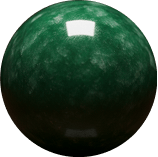
Green Tourmaline (Verdelite)
It is also associated with the Heart Chakra. It attracts the energy of vitality, endurance and prosperity.
Blue Tourmaline (Indigolite)
It is associated with the Throat and Third Eye Chakras. It strengthens open communication and intuitive abilities.
Yellow Tourmaline (Dravite)
It is associated with the Solar Plexus Chakra. It increases personal power, self-confidence and creativity.
Watermelon Tourmaline (Watermelon)
It has red/pink color in the center and green color on the outer edge. It provides a balancing effect on the heart chakra.
Spiritual & Energetic Benefits of Tourmaline
Tourmaline is unique in managing environmental stress and internal negativity.
EMF Shield
It protects against electromagnetic fields emitted by modern technologies such as computers, phones and Wi-Fi.
Dual Balancing
It supports a person's spiritual harmony by balancing male/female (Yin/Yang) energies.
Negative Neutralization
It absorbs all the bad energy in the environment or within itself and transfers it to the soil.
Mental Clarity
It clears mental confusion and helps in practical problem solving.
Physical Vitality
It supports the immune system and increases the body's energy level.
The spiritual and energetic features included in this guide are based on traditional beliefs and cultural background; It is not scientifically proven and is not a substitute for medical advice. The stone type of our products is guaranteed by the information stated on the product pages.